
Part 1 of the series
The Question Behind the Question.
Why Orthodoxy Still Matters in an Age of Suspicion?
Christian orthodoxy is being questioned. Again.
In an age of curated doubt and institutional skepticism, the historic Christian faith finds itself on trial—not in courts, but in the minds of modern scholars, cultural critics, and everyday skeptics. The question isn’t just theological—it’s existential:
How much of our doctrine was shaped by truth, and how much by power?
Can we trust that what we have now isn’t simply the result of political winners—both in the church and in empire?
It’s a fair question. And it’s not new.
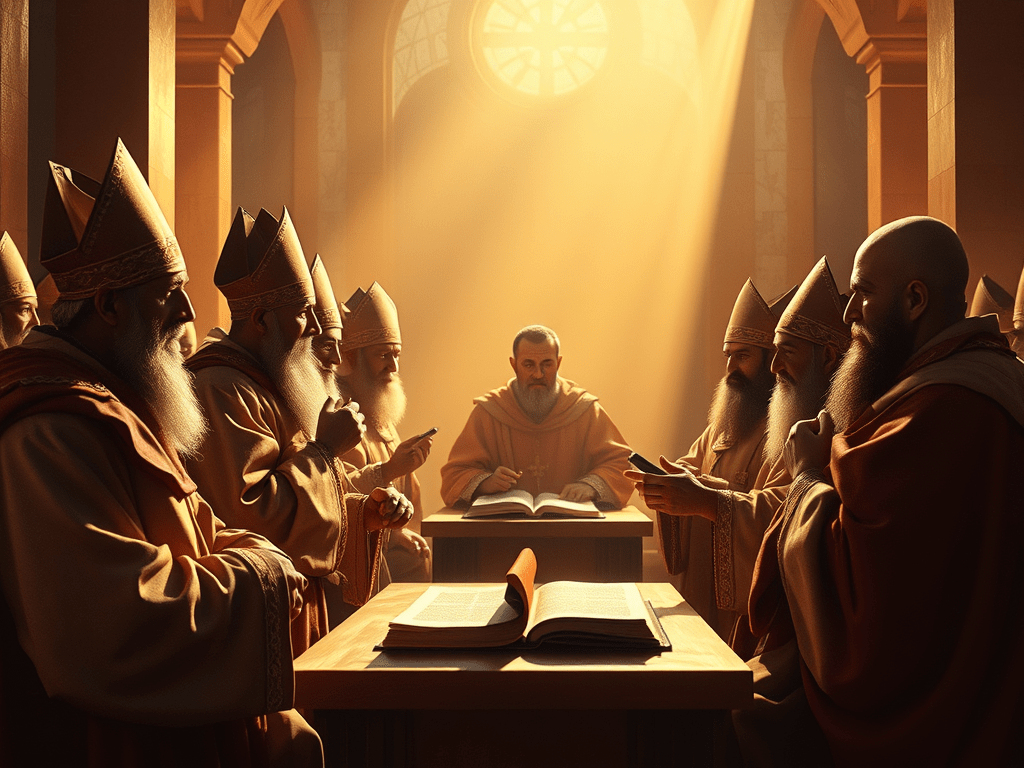
The suspicion is this: that orthodoxy is less about revelation and more about consolidation. That the creeds were political. That the canon was curated. That the councils were more Constantine than Christ. That what we call “orthodoxy” is simply the majority view that silenced dissent.
So let’s ask the question plainly:
Can we trust that Christian orthodoxy got it right?
But before we answer, we need to ask a deeper question:
What are we really doubting?
What Is Orthodoxy, Really?
Orthodoxy isn’t just the result of a vote tally at a council where bishops debated and the minority lost to obscurity. It’s more like a consensus—a convergence of conviction across Christian communities who already confessed a common core of belief. The Trinity. The Incarnation. The Resurrection. The authority of Scripture. The nature of salvation.
There’s strong evidence that doctrinal and ecclesiastical unity existed as early as the first century. Mechanisms were in place to resolve disputes. Letters were exchanged. Teachings were tested. The faith was guarded. The councils of the fourth century didn’t invent orthodoxy—they clarified and codified what had already been taught, preached, and lived.
Orthodoxy wasn’t imposed. It was recognized.
Why Skeptics Push Back?
In a culture that prizes plurality, orthodoxy feels like an affront. It offers a remarkably singular set of core beliefs—an audacious claim to truth in a world that prefers options. The skeptic imagines a library of suppressed alternatives: Gnostic gospels, mystical speculations, minority views that were cast aside by power-hungry bishops.
And so the suspicion grows:
Maybe our view of Jesus, our understanding of salvation, our trust in Scripture, our hope in resurrection—maybe all of it—is just the result of ecclesiastical politics, not divine truth.
But what if the councils weren’t just consolidating power?
What if they were safeguarding clarity?
Understanding how orthodoxy was established—through rigorous debate, careful transmission, and theological discernment—helps us see what it truly represents. If orthodoxy reflects the core truths passed down from the Apostles, refined through centuries of faithful wrestling, then we’re not just inheriting tradition for tradition’s sake.
We’re preserving truth.
What This Series Is About?
This series makes a claim:
That the church, guided by the Spirit, has faithfully preserved the truth about God.
Over the next few posts, we’ll trace the story of Christian orthodoxy—how it formed, what it preserved, and why it still matters. We’ll explore:
- How the early church guarded the gospel
- Who chose the Bible and why
- What heresies taught us about truth
- How orthodoxy has adapted and endured
- And why it still speaks to the human heart
This isn’t just a theological tour. It’s a journey of trust.
Because behind the question “Did orthodoxy get it right?”
Is a deeper question:
Can the Bible be trusted to tell the truth about God?
Let’s find out.
 Apologetics in the Lion City