
Can We Trust That Christian Orthodoxy Got It Right? – Part 5
How Orthodoxy Has Endured—and Adapted—Across Time
If orthodoxy holds truth, it must be both timeless and timely.
It must be theologically sound and culturally relevant.
It must preserve its core message while adapting its voice to every generation.
Let’s examine how Christian orthodoxy has withstood the test of time.
The Reformation: Clarifying, Not Abandoning
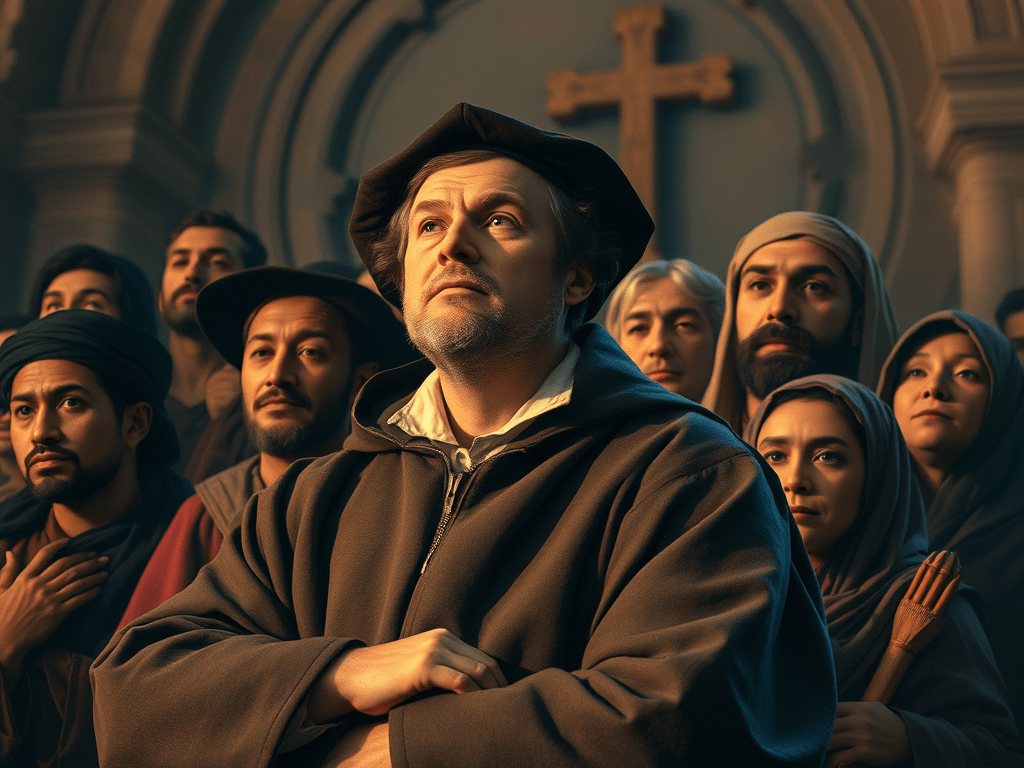
The greatest challenge to Christian tradition came in the 16th century, when the Protestant Reformers rejected many practices of the Catholic Church. But did they abandon Christian orthodoxy? Were they heretics in the mold of Arius or Pelagius?
Not quite.
Martin Luther denied papal supremacy, rejected the equal authority of Church tradition alongside Scripture, taught justification by faith alone, and condemned indulgences and sacramental efficacy. The Catholic Church saw these teachings as threats to centuries of doctrine. Luther, however, refused to recant unless convinced by Scripture and reason.
For this, he was excommunicated.
But he was not alone.
Other Reformers joined him—not to dismantle orthodoxy, but to recover it. They believed the gospel had been obscured by layers of tradition, hierarchy, and human effort. Their aim was not rebellion, but reformation.
They articulated five foundational principles:
- Sola Scriptura – Scripture alone is the final authority, not tradition interpreted by the magisterium.
- Sola Fide – Justification is by faith alone, not by a cooperative process of faith, works, and sacramental grace.
- Sola Gratia – Salvation is by grace alone, not earned or merited through moral effort.
- Solus Christus – Christ alone is the mediator, not priests, saints, or sacraments.
- Soli Deo Gloria – All glory belongs to God alone, not to ecclesial hierarchy or human achievement.
These weren’t innovations. They were clarifications—rooted in Scripture, reason, and the apostolic faith.
The Reformers hoped for renewal within the Catholic Church. Instead, they were rejected, and the schism that followed gave birth to Protestantism. But Christian orthodoxy continued—preserving what was taught by the apostles and refining theology for future generations.
Truth Across Cultures
Today, Christianity is no longer centered in Europe. It thrives in Africa, Asia, and Latin America—among cultures with vastly different histories, languages, and customs. And yet, the core of Christian orthodoxy remains intact.
The Nicene Creed is confessed in Nairobi and Seoul.
The gospel is preached in Portuguese and Swahili.
The Lord’s Supper is shared in megachurches and mud huts.
Orthodoxy has proven itself globally translatable—not because it’s vague, but because it’s rooted in truth.
But the trial continues.
Cultural shifts have pitched progressive values against Christian tradition. Many churches now abandon orthodoxy to align with prevailing norms—reinterpreting doctrines that conflict with modern sensibilities.
Some argue that moral progress came not from Christianity, but from humanistic philosophy or evolutionary ethics. But this claim lacks both evidence and coherence. There is no reason to believe that, without a moral compass, humanity will evolve toward virtue. History suggests otherwise.
Christian values—human dignity, sacrificial love, justice, mercy—have shaped much of what we call moral progress. Orthodoxy didn’t resist reform. It inspired it.
Why Orthodoxy Still Matters?
Orthodoxy is not tradition for tradition’s sake.
It is truth—applied to the world.
The gospel doesn’t change. But the world does.
And so the church must learn to speak ancient truth in modern tongues.
Orthodoxy must remain resilient to remain relevant.
It must deepen, not dilute.
It must clarify, not capitulate.
Because if orthodoxy is true, it must be able to speak to every age—without losing its voice.
 Apologetics in the Lion City